
Insight | Aug 10, 2026
Pharmaceutical Labels: Compliance, Safety & Printing Standards
In the pharmaceutical industry, a label is not just a branding tool - it is a critical safety document. Every batch code, expiry date, dosage instruction, and regulatory warning printed on a pharma label must be accurate, legible, and durable. An error is not a marketing problem; it can be a patient safety issue and a regulatory violation.
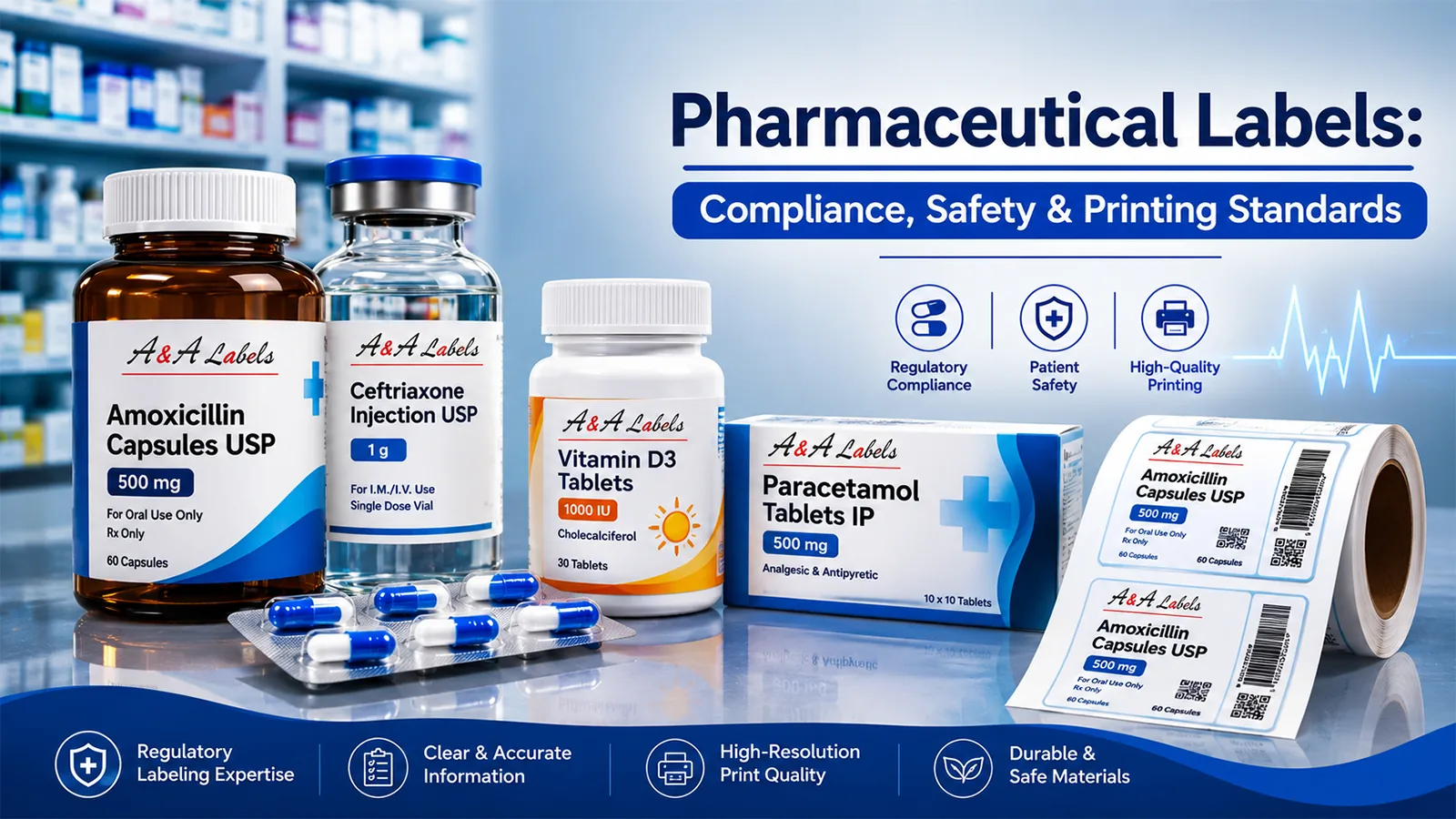
A pharmaceutical label is far more than a sticker with a brand name on it. It tells a patient or pharmacist what's inside, how to use it safely, and whether the product has been tampered with. For medicines, this small piece of packaging carries real responsibility — get it wrong, and the consequences go beyond a design complaint.
Why Compliance Comes First?
Pharmaceutical labels operate under some of the strictest regulatory expectations of any packaging category. Batch numbers, manufacturing and expiry dates, dosage instructions, and regulatory text all need to be accurate, legible, and correctly formatted — errors here can trigger recalls, regulatory action, or, in the worst cases, harm to patients. As serialization and track-and-trace requirements continue to tighten across Indian and export markets, compliance labels increasingly need to support barcoding and batch-level traceability as standard, not as an add-on.
Tamper-Evidence as a Safety Feature
Tamper-evident labels exist to answer a simple but critical question: has this product been opened or altered since manufacturing? A properly engineered tamper-evident label leaves unmistakable evidence of interference — a void message, a label that fractures rather than peels cleanly, or an adhesive strong enough to damage the packaging on removal. This isn't a cosmetic feature; it's a direct safeguard for patient trust and safety.
Printing Standards That Matter
Pharma label printing demands a
level of consistency that other categories can sometimes tolerate deviation
from. Variable data — batch codes, expiry dates, serialization numbers — must
print accurately on every single unit, not just most of them. This is why
full-batch, camera-based inspection matters far more here than sample-based
quality checks: a single unreadable barcode or incorrect batch code in a
production run of thousands can compromise an entire shipment's traceability.
Material Considerations
Material choice depends on the product format — self-adhesive labels for bottles and blister packs, sheet labels for cartons, and specialized substrates for cold-chain or moisture-sensitive formulations. Each needs to hold up to handling, storage, and transport conditions without compromising legibility or adhesion over the product's full shelf life.
Why Manufacturing Partner Choice Matters?
Not every label manufacturer inIndia is equipped to handle the precision pharmaceutical labeling demands. The
right partner combines compliance awareness, consistent quality control, and
the technical capability to support barcoding and track-and-trace requirements
— reducing risk for both the brand and, ultimately, the patient.
Conclusion
Pharmaceutical labeling sits at the intersection of design, compliance, and patient safety, and it deserves a manufacturing partner who treats it that way. With over 30 years of labels manufacturing experience, A&A Labels manufactures pharmaceutical labels with tamper-evident construction, barcode and track-and-trace support, and 100% camera-inspected production quality — built for the precision this category demands. Get in touch with our team to discuss your pharmaceutical labeling requirements.